Categories
Uncategorized

Gamifi-cated world

Have you ever wondered? if the decisions you make, do not necessarily originate from you?
We live in a world that works towards pleasing the naked eye. But have we ever, at the very first glance, stopped to think? Visual appearances can be deceiving. But maybe, we are not as smart as we think we are. Everything we see and experience is a maze in itself, a pattern far more complex than even Fibonacci’s sequence at times.

But who is the magician that curates such an illusion in our brains? we live in a modern concrete jungle that has disrupted all balance. The rulers are multi-corporates that control our consuming behaviour. I am no longer writing with context to the food chain, or the ecological balance. I am indeed mentioning about the illusion, we have become accustomed to. Whatever pleases the eye, is what we now desire.
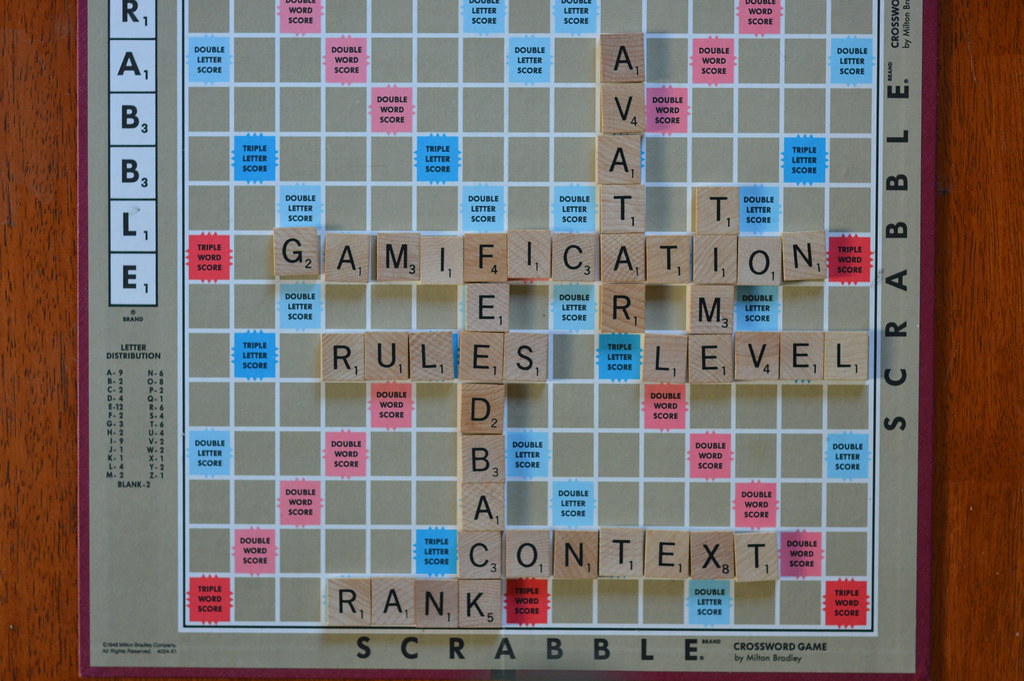
Gamification, has nothing to do with how we perceive it at the very first glance. Our vision portrays the term to be related to gaming and childhood extravaganzas, when in reality, the illusion is defined as the application of game design elements in several non-game contexts (Huotari & Hamari, 2016).

Well, in order to be more precise, it is a phenomenon adopted by organisations to create an imaginative game scenario for our human brain, which relates to common elements observed during a game, such as point scoring, competition or even following a set of rules in order to complete our given quest and receive a reward at the end. What was a simple strategy in a game, is now a marketing technique used for product placement and customer acquisitions (Deterding, 2012).

Gamification according to researchers (Arakawa & Matsuda, 2016), is believed to be a novel incentive used in order to determine the sense of participatory function and behaviours among several individuals across a similar platform, for a similar type of interest shared by these individuals. This very form is calculated through a form of incentive mechanisms, allowing its users to gain a holistic approach towards gaining rewards or bonuses that helps them reach their goal or an end product set by their representing brand.

“HUNGRY JACK´S – BRAIN FREEZE” by Noelia Lozano STUDIO is licensed under CC BY-NC-ND 4.0 

Hungry Jack’s is a common example used in explaining gamification models, their game based model of “Shake and Win” allows consumers to take situational advantage of using their services and platform from time to time in order to benefit from their offers, regardless of them being a loyal or frequent consumer of the products (Adrenalin media, 2020).

This has enabled them to psychologically appoint their customers to retain the application for periodical use, in a sense, they are still retaining customers, as well as maintaining steady flow in business, with the free marketing they will get towards the end of their customer’s departure (Sailer et al., 2017).

Gamification has allowed users to be mentally motivated towards putting in that extra effort while doing the tasks we otherwise wouldn’t, even if were being asked to do nicely. And why would we? what did we get out of it? these very questions, enabled the application of rewards in our every day life.

We as humans, are never just satisfied with one thing, we are looking to make the most of everything available around us, to gain that maximum benefit or so we think. While we believe that we make a bit extra, the company takes the benefit of the doubt and gets the most of its consumers, without them even realising, where we have helped them even more.

Gamification is not always applied to make the most off their consumers. Several organisations work towards motivating their customers, to become more loyal or keep them engaged across the various activities, their companies cater to.

We can see a major incline in the use of gamification models in the fitness industries. Several sports brand and fitness applications have created a rewards based programs through the help of system developed applications that can be used straight form the user’s smart devices, that are so easily accessible.

It is not just in the brand’s interest, but also the consumer’s demand for such a motivation based platforms that helps them develop into better performing humans and not at the price of just self motivation, but repeated and constant rewards that is growth based.
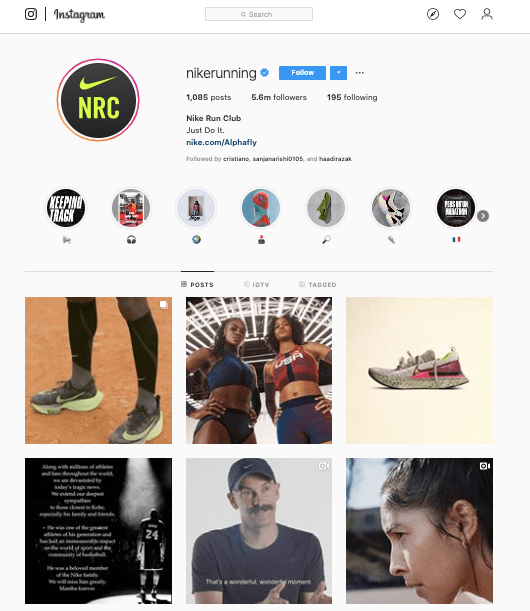
Instagram page of nike’s run club

My main focus is on Nike+ app available that helps create a competitive platform through their Fuel campaign. It has several features, such as the Nike Run Club app and the Nike Training club app, which caters to tasks and competitions that further rewards into unlocking levels of furthermore accessible features.
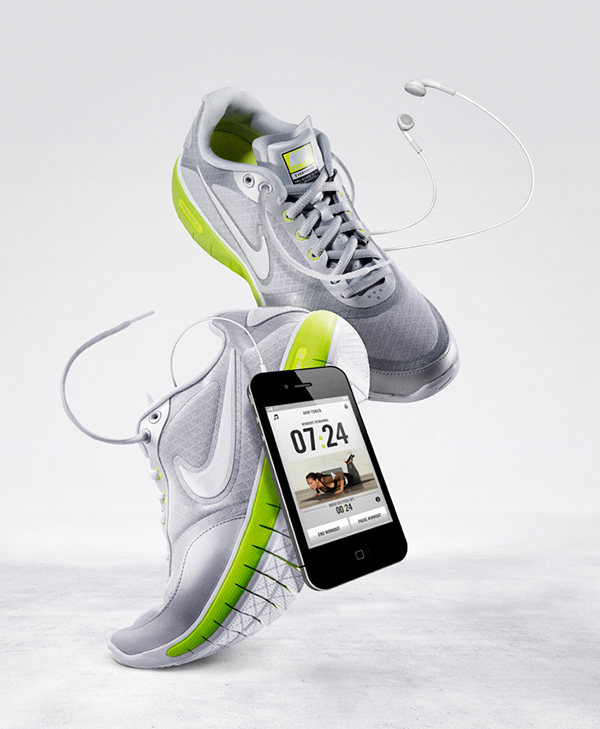
“Nike Free + NTC” by Emelie Ivansson is licensed under CC BY-NC-ND 4.0 

Nike, as we all know is a global brand. Its a brand we trust, love and sometimes even blindly follow. Yes, we don’t need any solid justification when its all about Nike, the reason for this is because, Nike have been one of the most succesfull models in gamification. Nike has enhanced user motivation towards becoming a better athlete or towards desiring to become fit, with their self sustained Nike+ application.

Video by me on Gamification

It is a mobile app that is available to all free of cost. It also featured for its users to go online and campaign about their hunger towards fitness and thirst of gaining more, through a healthy competition over the various social media platforms amongst their own friends.

This has seen huge amounts of positive impacts, the application of gamification being integrated into our everyday lives has brought, also showing us the potential of the model in the near future, being used towards customer/consumer benefit, rather than a means of exploitation of its users.

References

Adrenalin media (2020). Hungry Jack’s Mobile App + Website Platform – Adrenalin. [online] Adrenalin. Available at: https://www.adrenalinmedia.com.au/work/hungry-jacks/ [Accessed 1 Feb. 2020].

Arakawa, Y. and Matsuda, Y. (2016). Gamification Mechanism for Enhancing a Participatory Urban Sensing: Survey and Practical Results. Journal of Information Processing, 24(1), pp.31-38.

Deterding, S. (2012). Gamification. interactions, 19(4), p.14.

Huotari, K. and Hamari, J. (2016). A definition for gamification: anchoring gamification in the service marketing literature. Electronic Markets, 27(1), pp.21-31.

Sailer, M., Hense, J., Mayr, S. and Mandl, H. (2017). How gamification motivates: An experimental study of the effects of specific game design elements on psychological need satisfaction. Computers in Human Behavior, 69, pp.371-380.

Image sources:

Fibonacci’s sequence art by beats people movement – https://search.creativecommons.org/photos/e72f71e1-136c-4465-85cb-3b360997298f

Scrabble gamification – https://search.creativecommons.org/photos/d57f52b2-5744-403f-b15c-3acfb408f879

Hungry Jack’s brain freeze image – https://search.creativecommons.org/photos/1b879d57-d078-436c-a364-acaba470feb4

Nike + app – https://search.creativecommons.org/photos/21986765-3a8b-4c14-901f-1f5ff3ac6598

Nike Run club, Instagram page from Medhajit Katari’s profile – https://www.instagram.com/nikerunning/?hl=en

Categories
Uncategorized

DIGITAL MEDIA AND SURVEILLANCE

This blog post is a culmination of the information gathered through the digital representation of humans as online entities. After having written my first blog, I soon realised that my expression of interest towards the usage of digital new media was exponentially higher than writing essays in my university. In an assessment task for my present unit at Deakin university, I was given the choice between several topics that reflected on the impacts on human behaviour through the usage of new media. Amidst deciding between gamification and surveillance, I was found to fathom into an investigative report that scrutinises privacy and data of personnel online. It is hence, out of this interest, that my inner Sherlock Holmes, was brought to life.

I have read several articles to see whether we are truly the victims of online identity theft or data theft. Data Surveillance online, is basically a form of scapegoating by large corporate, government bodies, as well as the platform owners. Social media and new media platforms cater to the largest form of online identity amongst people. Online Surveillance carried out by government bodies is to make sure, the people are aware of calamities of emergencies, as well as to maintain law and order in the online society as well. The corporate however, use competitive advantage of selling our data to media and advertising companies that will enable them to make product placements and marketing plans based on the data accumulated.

I have created a podcast on Soundcloud on this topic and I also briefly explain the whole process in a video uploaded on my Twitter profile. I would recommend all my readers to follow my link and give it a listen. I have used Voice memo application on my MacBook Pro to record my narration. I have also gathered journal articles online for research. I have used the help of Creative commons website, Bensound.com for free to use music. I have used the help of Audacity to make and edit the final podcast. Finally, I have uploaded my podcast on my Soundcloud profile, link down below. Feel free to drop a like and Subscribe, Open to accept feedbacks.

During the making of this Podcast, I have faced judgement day, with bad health conditions and irregular voice. I believed that I would have sounded terrible on my podcast. However, through sincere determination, I was able to cure my flu, with the help of home remedies. Back to Podcast, I found it a bit hard to create a structure over the vastness of my topic. I was able to validate on a very few topics and points in the given allotted time. However, I had most fun in the editing of the podcast. Audacity gives a variety of options to make my podcast attractive for my audience with music and effects. I was able to work on the editing part quicker than expected. The most challenging aspect of this task was to come up with content of my own with the help of scholarly research, that I have used to select for my information. I have also found this task to be very educative, with regards to video editing and reflection. As well as making and publishing my very own podcast.

Finally, in conclusion, I was able to learn and reason to my question about why is a balanced perspective needed to understand the complexity of surveillance processes and practices. Answer to this is that, we can never be too careless and everything you post online is not safe. Be careful and choose wisely for the decisions you make.

Check the link for tips on how to make your podcast better:

My Podcast:

https://soundcloud.com/user-833262621/alc708-sc-podcast

Categories
Uncategorized

What is my identity ?

Medhajit Katari Twitter handle

Online identity is something that most of the youth have been in a sense, encapsulated by. Today, we see millions of online profiles that compete against one another to be better. We also observe competition no longer based on who’s got the highest grades, or who is the better athlete or sportsman.

We see the very same people being judged on the basis of, who’s got the most number of likes on Facebook & Instagram, Re-tweets on Twitter and Views on Youtube. Also influenced by factors such as race, ethnicity, nationality and religion (De Anda and Riddel, 1991). Here is where, this person identifies, him/herself as an influencer. This influencer has set a huge example. While one can only perceive this is two ways negatively or positively.

Whilst the influencer’s life looks incredibly attractive images, there might be the possibility that social media and reality don’t coincide. However, it is make-belief that depicts that a person is living a certain style or lifestyle based on what he/she shows.

Many a times we choose to be who cannot be or try to copy our idols and role models. In my face, considering how much I love football, You may know by now, after you read my about me on the about author page that, I happen to follow many footballers closely through their social media handles such as twitter and Instagram.

When I open the Instagram page of Cristiano Ronaldo and see his 193million followers, obviously I would be foolish to feel bad about myself for having just a few 100 followers. On the contrary, I look at Cristiano as not just an influencer and an athlete but also as a great role mode that I aspire to be like someday.

Cristiano Ronaldo’s Instagram following

Now the question arises. Have you ever wondered if an influencer is affected by his/her identity online? This is a simple rather straight forward answer. Yes of course they are influenced by all the likes they get, the comments they read and also mass numbers of crowd they are exposed to (Barker, 2009). Athletes/ famous influencers are no doubt still humans. Hence, it is common for any and every human to make mistakes. There are mistakes done in personal life and mistakes done online. However, when you are famous, you are bound to gain attention and exposure from the people around you. You are also bound to face criticism and even hate when these influencers make a mistake. However, we cannot always say that the case can be vice-versa. Because of this phenomenon, athletes go through a lot of psychological issues that also affect their professional careers.

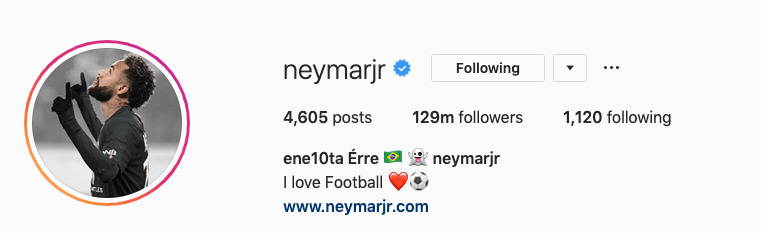
Neymar Jr’s Instagram following

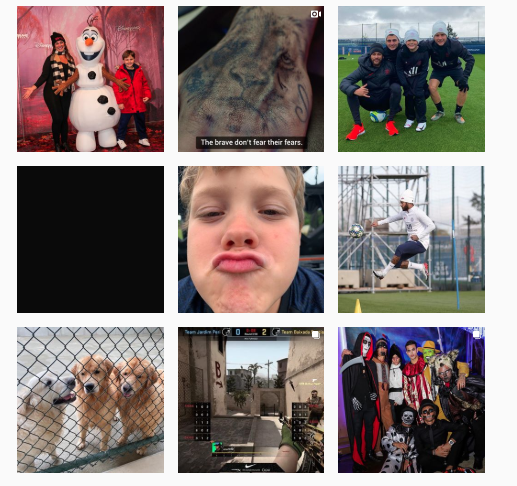
For example, when we consider the case of Neymar Jr, a great Brazilian football player who has been celebrated by millions for his achievements in football and praised for his skills is also one of the highest paid and rated influencer on social media with over 129 million followers on Instagram. He has over the years received several loads of criticism from his very own fans. He’ gained comments on his lifestyle, by being called a kid for playing video games and childish for always being a happy and positive soul.

Neymar’s personal lifestyle on Instagram

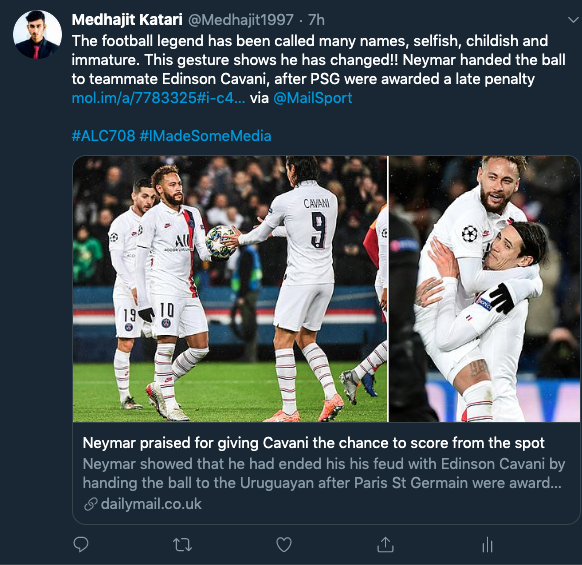
People also criticised his ego as a football player since his first few games at the French club PSG. After all this Neymar, is a true legend for have taken all criticism and negative feedback and turned it into a motivational booster to up his game and redeems his respect amongst his fans with simple gestures and humbleness (Wood, 2019). This is again a great example for the younger generation to use negativity and turn it into a positive reinforcement in becoming a better individual.

Tweet about Neymar’s change in attitude.

I too, have had to learn it the hard way by being rejected, criticised and even laughed at. While this may hurt and inflict mental stress, I’ve always made it a point to remember my idols and how they deal with their social identity to create a positive environment around them. I believe that, some words are meant to heard on one ear and let go through the other. Especially when it is negative and does not help replicate on the errors made. We all make mistakes. But when we make horrendous mistakes online, it is never forgotten. When using the social mediums, it is hence necessary to be careful when relaying your thoughts, opinions or even aspects of your private life publicly. Unless of course, such criticism does not influence you.

Bibliography:

Barker, V. (2009). Older Adolescents’ Motivations for Social Network Site Use: The Influence of Gender, Group Identity, and Collective Self-Esteem. CyberPsychology & Behavior, 12(2), pp.209-213.

De Anda, D. and Riddel, V. (1991). Ethnic Identity, Self-Esteem, and Interpersonal Relationships Among Multiethnic Adolescents. Journal of Multicultural Social Work, 1(2), pp.83-98.

Wood, D. (2019). Neymar praised for giving Cavani the chance to score from the spot. [online] Mail Online. Available at: https://www.dailymail.co.uk/sport/football/article-7783325/Neymar-gifts-Edinson-Cavani-spot-kick-Champions-League-clash-two-years-PENALTY-BUST-UP.html#i-c480cc144f61a0fd [Accessed 14 Dec. 2019].

Categories
Uncategorized

Introduce Yourself (Example Post)

This is an example post, originally published as part of Blogging University. Enroll in one of our ten programs, and start your blog right.

You’re going to publish a post today. Don’t worry about how your blog looks. Don’t worry if you haven’t given it a name yet, or you’re feeling overwhelmed. Just click the “New Post” button, and tell us why you’re here.

Why do this?

  • Because it gives new readers context. What are you about? Why should they read your blog?
  • Because it will help you focus you own ideas about your blog and what you’d like to do with it.

The post can be short or long, a personal intro to your life or a bloggy mission statement, a manifesto for the future or a simple outline of your the types of things you hope to publish.

To help you get started, here are a few questions:

  • Why are you blogging publicly, rather than keeping a personal journal?
  • What topics do you think you’ll write about?
  • Who would you love to connect with via your blog?
  • If you blog successfully throughout the next year, what would you hope to have accomplished?

You’re not locked into any of this; one of the wonderful things about blogs is how they constantly evolve as we learn, grow, and interact with one another — but it’s good to know where and why you started, and articulating your goals may just give you a few other post ideas.

Can’t think how to get started? Just write the first thing that pops into your head. Anne Lamott, author of a book on writing we love, says that you need to give yourself permission to write a “crappy first draft”. Anne makes a great point — just start writing, and worry about editing it later.

When you’re ready to publish, give your post three to five tags that describe your blog’s focus — writing, photography, fiction, parenting, food, cars, movies, sports, whatever. These tags will help others who care about your topics find you in the Reader. Make sure one of the tags is “zerotohero,” so other new bloggers can find you, too.

Design a site like this with WordPress.com
Get started